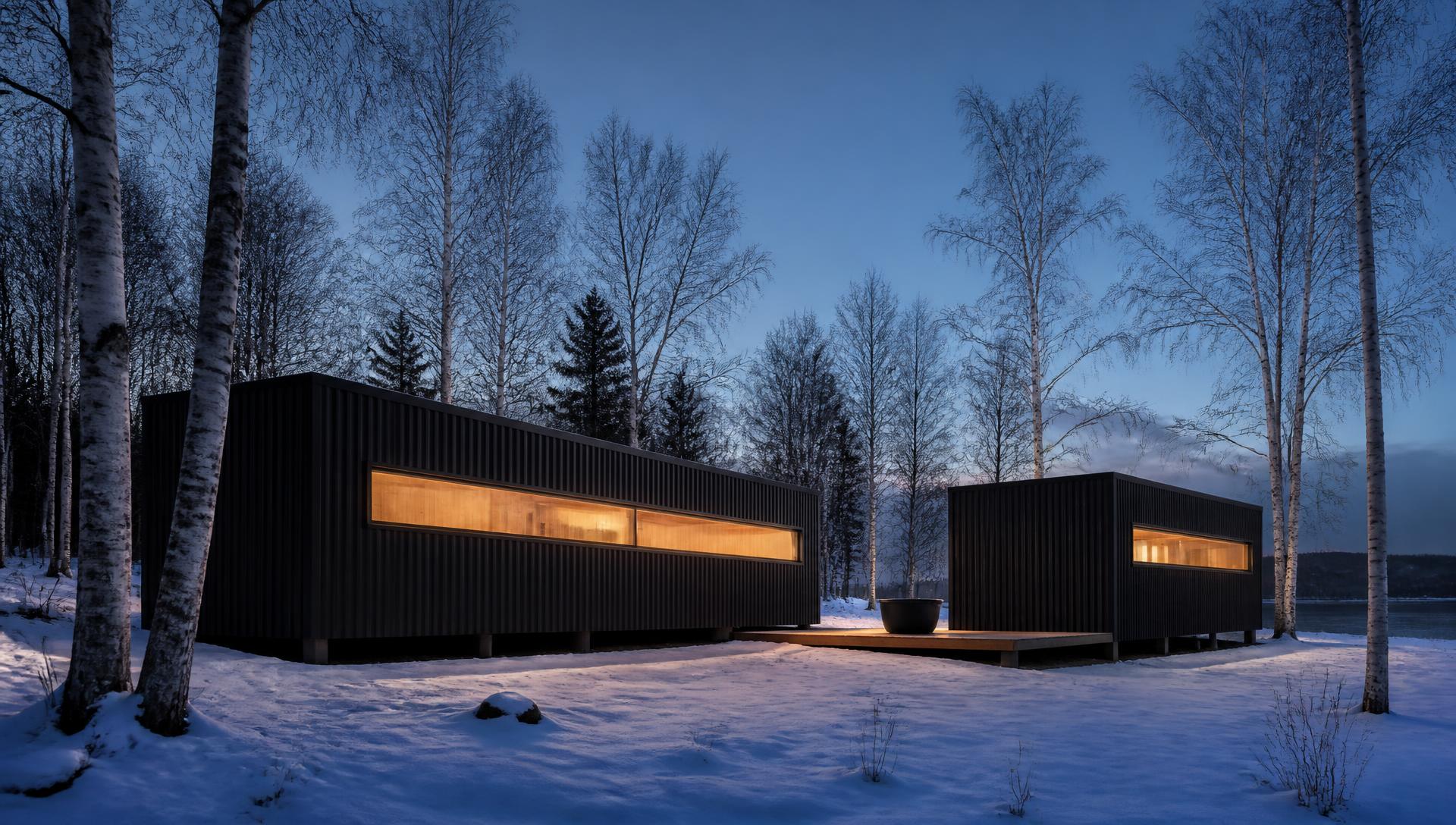
THE HOMEBASE COMPOUND
Why choose between training and recovery?
Any TRAIN paired with any RECOVER — connected into one coordinated private performance and recovery environment.
Why choose between training and recovery?
THE HOMEBASE COMPOUND pairs a TRAIN module with a RECOVER module: TRAIN 20 or TRAIN 40, with RECOVER 20 or RECOVER 40. Any combination.
Modules, covered cedar deck, freestanding cold plunge, architectural lighting and site integration planned together as one environment.
Investment direction is shared at your design consultation.
Any pairing
TRAIN 20 or TRAIN 40 with RECOVER 20 or RECOVER 40. The pairing is decided against the property and how you use it.
Deck and plunge
Covered cedar deck between the modules. The freestanding plunge sits on the deck, where it will actually get used.
Site integration
Architectural lighting, grading and approach designed with the placement, not after it.
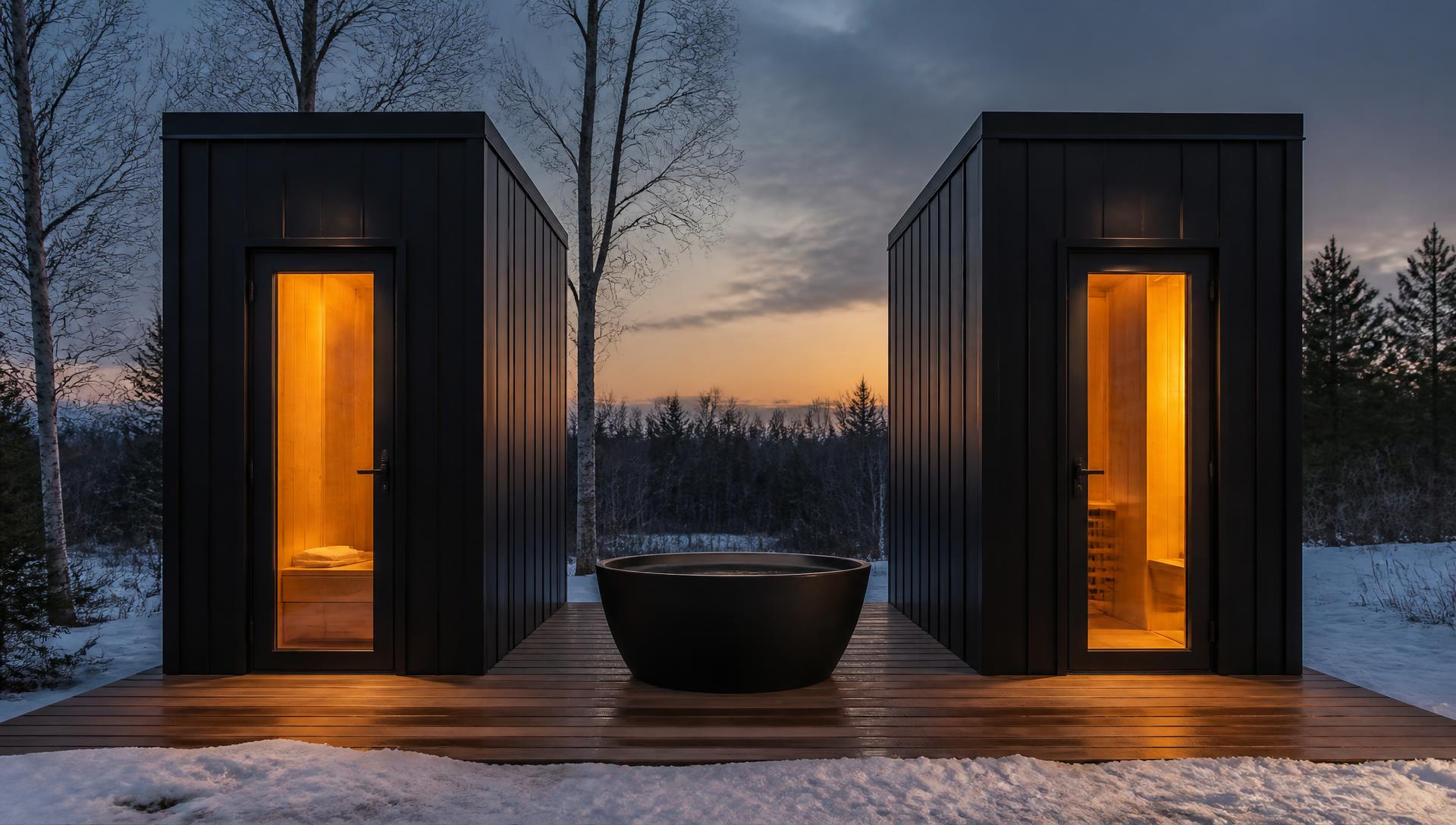
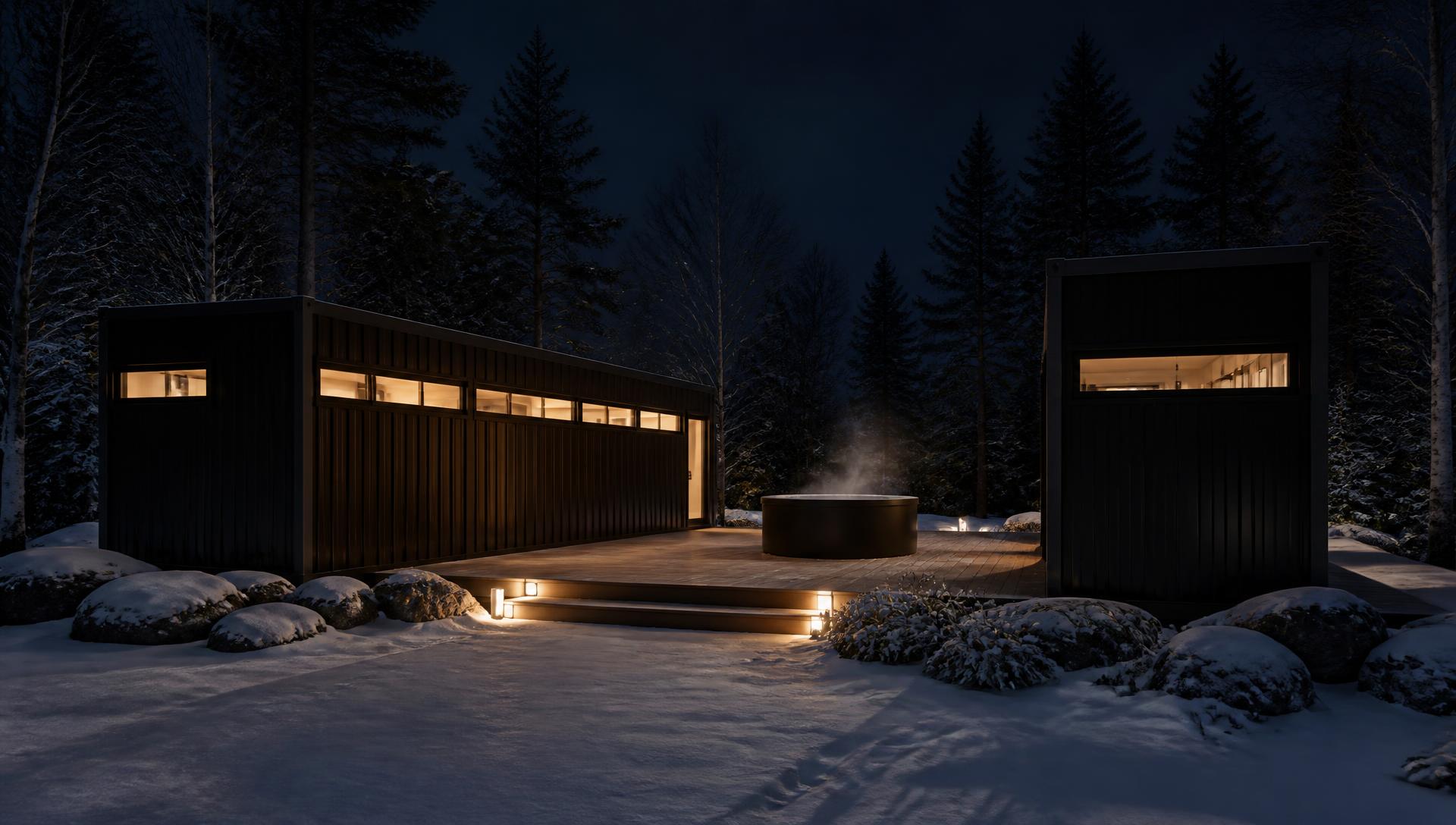
Concept imagery. Renderings of Homebase builds, not photographs of delivered projects.
Pairing
Any TRAIN. Any RECOVER. One environment.
Train side
TRAIN 20 for a complete strength setup with an available full 20 ft turf lane, or TRAIN 40 for multiple racks, dedicated cardio and a large open floor at once.
Recover side
RECOVER 20 for the focused four-modality sequence, or RECOVER 40 when you also want a dedicated stretch, yoga and mobility area.
The deck between them is what makes it a Compound. Cold plunges are freestanding, above-deck units.
Configurable
- Connecting breezeway
- Shared deck
- Hot tub + cold plunge — Cottonwood by Hydro System (exterior deck)
- Architectural site lighting
Best for
- Full private performance environments
- Larger properties
Site considerations
- Combined footprint
- Utility coordination
- Access for multiple modules
- Deck and footings engineered to carry a filled hot tub or plunge
- Freeze protection, drainage and service access for exterior units
Specified equipment
One unit. A hot side and a cold side, steps from the door.
Hot tub + cold plunge: Cottonwood by Hydro System.
Hydro System is our supplier partner for the hot tub and cold plunge. The Cottonwood is a single acrylic unit with two sides: one warms to 104°F, the other holds as low as 37°F.
Hot, then cold, then back inside to the sauna. No second appointment, no drive, no shared locker room.
Exterior deck placement. The Cottonwood is 91 in wide and a finished module interior is approximately 84 in, so it sits on the deck — freestanding and above deck, never recessed or sunken. Sauna and steam live inside the module; hot and cold live on the deck.
- 205 gallons of water is significant weight before the unit and its occupants. The deck and its footings are designed to carry the filled unit, engineered for the specific installation.
- Exterior placement means freeze protection, drainage and service access are part of the design, confirmed per project.
- Electrical, plumbing and installation requirements are confirmed with the manufacturer during design.
Hydro System is a supply partner. Specifications are the manufacturer's published figures and are confirmed at design.
Specification
- Dimensions
- 91 × 91 × 36 in
- Capacity
- 205 gallons
- Material
- Acrylic
- Hot side
- Warms to 104°F
- Cold side
- As low as 37°F
- Jets
- 25
- Cabinet
- Chestnut · Driftwood · Graphite
- Acrylic
- Midnight Canyon · Smoky Mountain · Sterling · Storm Cloud
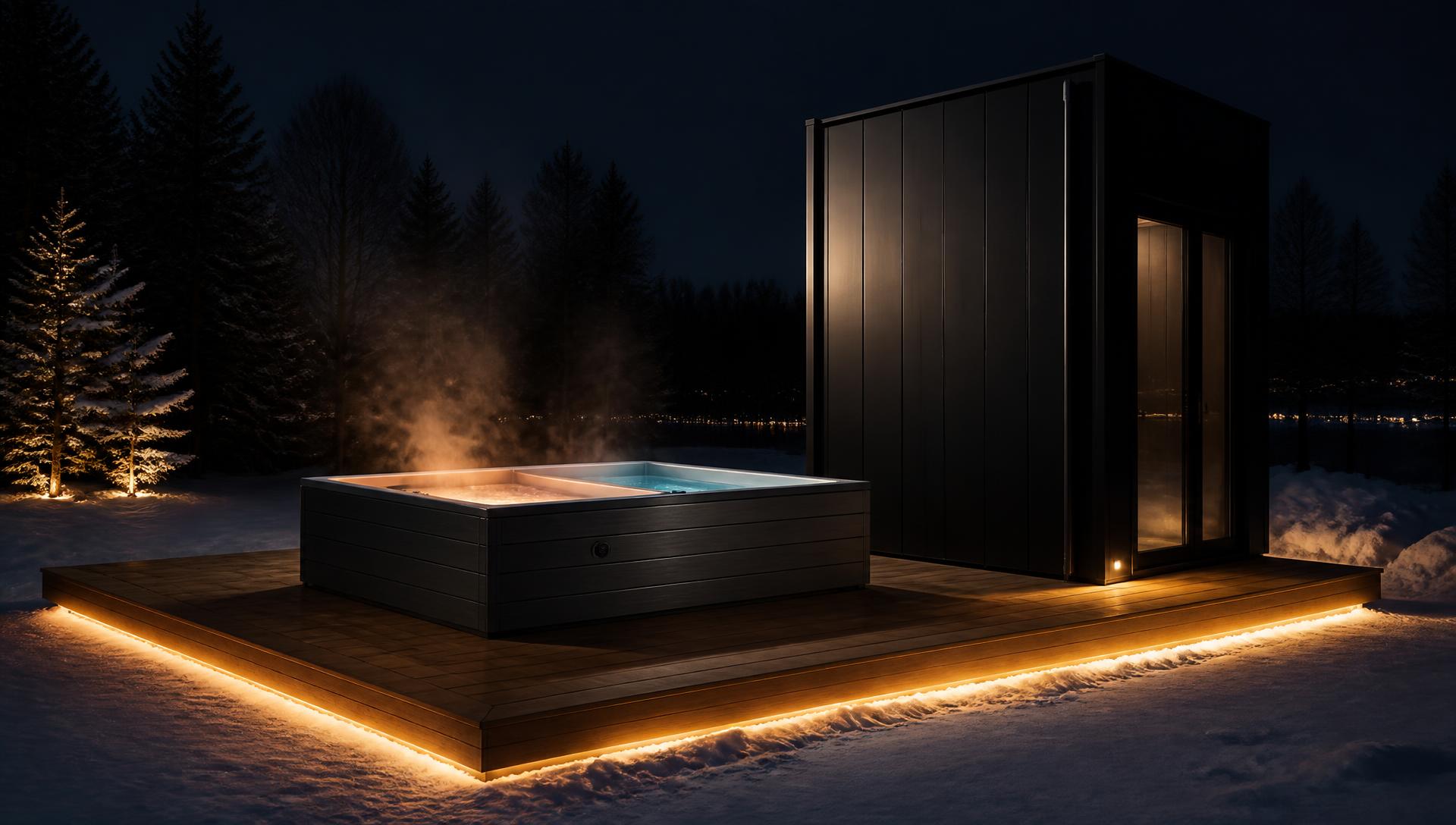
Concept imagery. Renderings of Homebase builds, not photographs of delivered projects.
Moveability
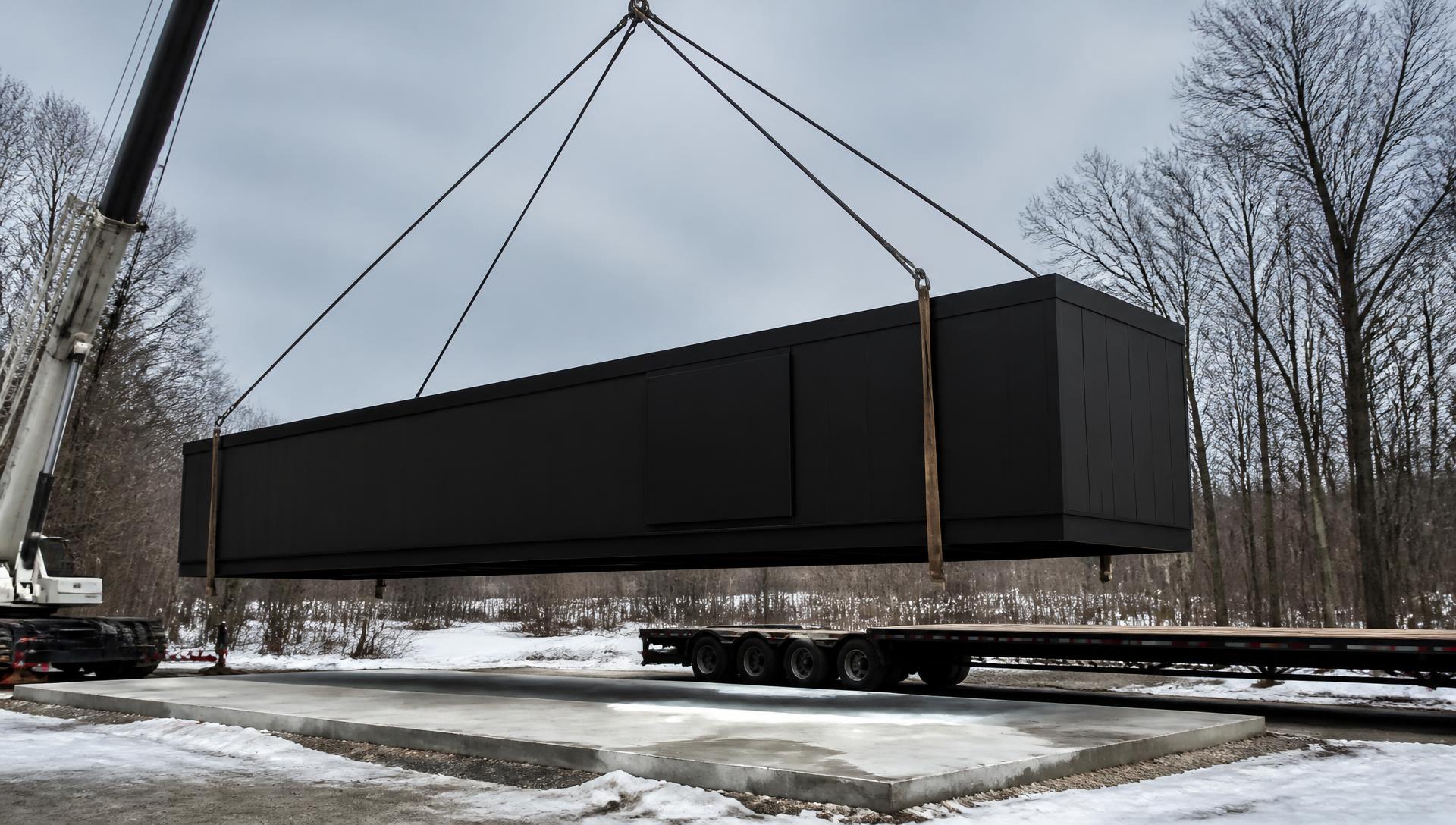
Build it here. Take it with you.
A Homebase sits on a prepared pad, not a foundation you are married to.
An addition stays with the house. A Homebase does not have to.
It is a manufactured structure, set down rather than built in place. Power is connected, water and drainage where recovery is included, and the module is levelled on the pad. All of that can be undone.
A sealed, coated shell is also part of why a Homebase can be relocated rather than demolished. The structure that gets lifted off the pad is the same steel box we sealed in the shop.
Can you move it? →Relocation is real, not automatic. It depends on access for a crane and transport, the pad at the new property, the utility runs at both ends, and what has been built around the module since it was set. We assess each site rather than promise every one.
Concept imagery. Renderings of Homebase builds, not photographs of delivered projects.